International cargo shipping routes are easier to plan when the route, shipment type and delivery deadline are considered together. A business importing stock from a Chinese supplier may need a different solution from a family sending personal effects to Bangladesh or a company moving goods through Dubai. Choosing a method based only on a headline price can create a false economy if the shipment misses a sales window, requires extra handling or arrives with documentation still unresolved.
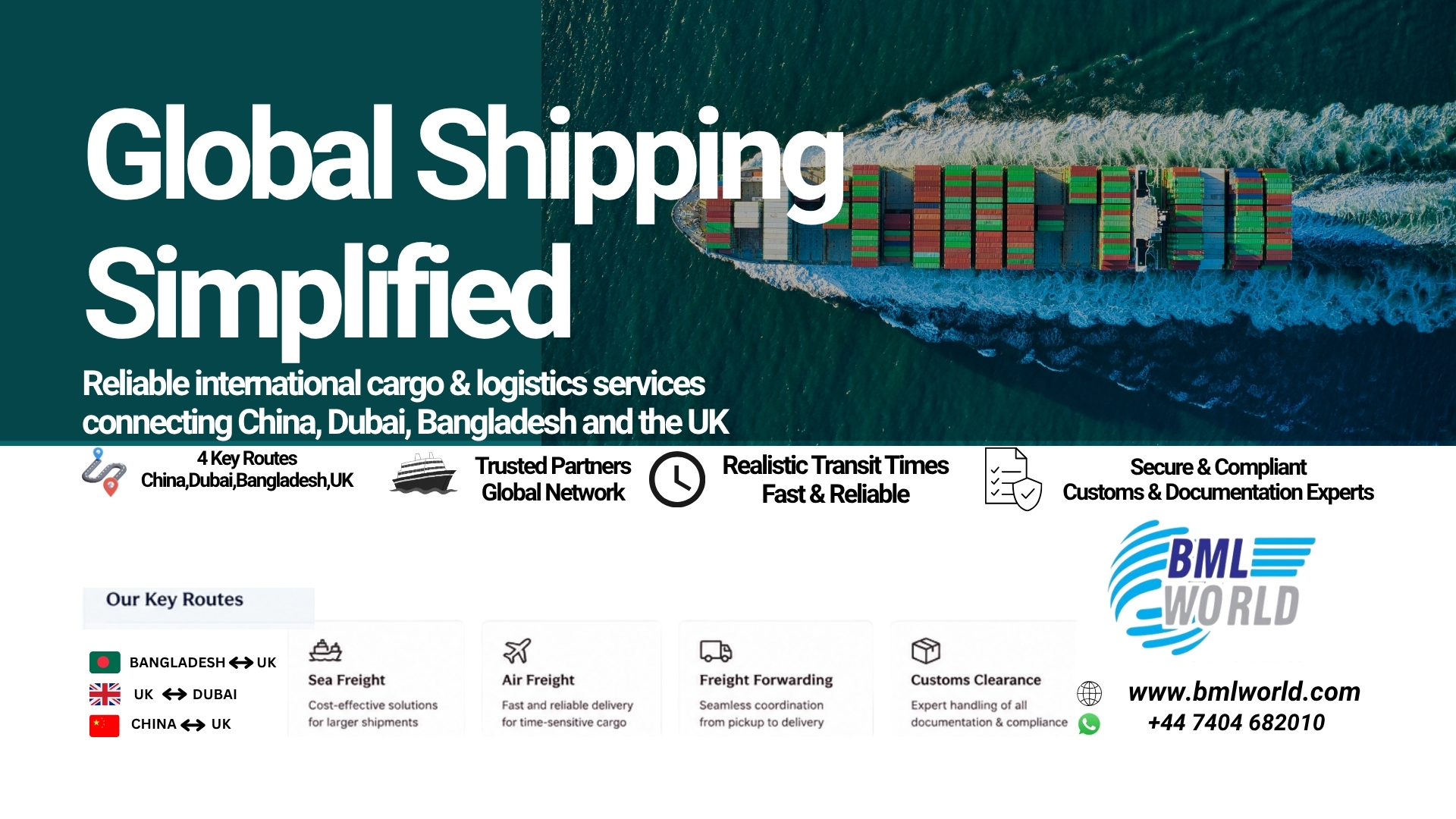
BML World Cargo and Logistics focuses on key corridors connecting China, Dubai, Bangladesh and the UK. This guide explains the practical differences between those routes and the questions worth answering before requesting a quote. Transit estimates and service availability can vary by origin, destination, cargo type, schedule and customs processing, so confirm current details for your specific shipment before booking.
Start with the shipment, not just the destination
Before comparing freight options, prepare five details: what the goods are, their packed weight and dimensions, where they will be collected, the final delivery address, and the date by which they are needed. For commercial goods, also identify whether the shipment is a sample, a replenishment order, a palletised consignment or a larger volume. For personal cargo, list the contents accurately and flag fragile, valuable, electronic or otherwise restricted items before packing.
These details help a logistics provider judge whether air freight, sea freight, consolidation or a combination is appropriate. They also reduce the risk of a quote changing because the initial description left out a handling requirement.
China to the UK: plan around supplier readiness and landed cost
For UK businesses sourcing products through Alibaba, 1688, Made-in-China or directly from a factory, the shipping plan should begin before the supplier says the order is ready. Ask when production will finish, whether the goods are packed for export, and whether several suppliers can deliver to one collection or consolidation point. Combining eligible orders may reduce duplicated handling or make a sea-freight option more practical, but consolidation also needs time and clear inventory records.
Sea freight is often considered for larger, less urgent consignments, while air freight can suit samples, urgent stock or lighter shipments where time matters more than the freight premium. Compare the full landed-cost picture, including origin handling, freight, customs-related charges, destination handling and final delivery where applicable. A low freight rate alone does not show the total cost of getting saleable stock to your premises.
Dubai and the UK: clarify whether the shipment is direct or re-export cargo
Dubai’s role as a trading hub means some shipments may originate in the UAE while others may have arrived there from another country. That distinction can affect the paperwork and the way the goods are described. Before booking, tell the provider whether the goods were manufactured in the UAE, purchased from a Dubai-based supplier or are being re-exported. Keep commercial invoices, packing lists and product descriptions consistent, and ask what export or re-export documents are needed for the particular movement.
Air freight may suit time-sensitive or compact cargo, while sea freight may be more economical for bulky goods that can tolerate a longer journey. The right choice depends on actual dimensions, cargo characteristics and the required delivery date, not just the distance on a map.
UK to Bangladesh and Bangladesh to the UK: personal parcels and commercial cargo
These two directions serve both personal and business needs. A household parcel for relatives has different packing, declaration and delivery considerations from a commercial shipment of goods intended for resale. Air freight is commonly considered when a parcel is time-sensitive; sea cargo can be worth comparing for larger or heavier consignments when a longer transit period is acceptable. Ask the provider for a current estimate rather than treating a past delivery time as a guarantee.
For senders in the UK, especially those arranging delivery to family, an accurate recipient address and reachable phone number can help the final delivery stage. Commercial shippers should confirm the correct product description, declared value and any commodity-code or import-document requirements before dispatch. Never assume that rules for one direction automatically apply to the other: export and import requirements depend on the countries and goods involved.
A practical quote checklist
A useful quotation should make clear what is included and what is not. Ask whether collection, packing, warehouse handling, freight, customs-clearance support and final delivery are included or priced separately. Confirm how chargeable weight or volume is calculated, whether the estimate depends on final measurements, and how long the quote remains valid. For commercial imports, ask who is responsible for providing the invoice, packing list, product information and any required registrations or declarations.
Also ask how exceptions are handled. What happens if the supplier misses the handover date, customs requests further information, or the shipment dimensions differ from the estimate? Clear answers before booking are more useful than vague promises of “fast” or “cheap” delivery.
Documentation and restricted goods need early attention
Do not wait until collection day to disclose unusual cargo. Batteries, liquids, chemicals, food, medicines, branded goods, high-value items and other regulated categories may require additional checks, packaging or documents, and some items may not be accepted. Requirements vary by commodity and route, so obtain confirmation from the carrier or freight provider before packing or paying.
Use accurate descriptions and declared values. Misdescription or under-declaration can lead to inspection, delays, extra charges or other customs problems. Keep copies of the invoice, packing list, booking confirmation and correspondence so that the sender and receiver can answer questions consistently.
How to compare providers fairly
Compare providers on the same shipment specification. One quote may include door-to-door handling while another covers only airport-to-airport or port-to-port movement. Check the route experience, communication process, tracking information, claims procedure and the availability of support when a shipment needs attention. If you are moving goods regularly, ask whether scheduled collections or consolidation could fit your purchasing cycle.
BML World has UK and Bangladesh operations and handles the routes described in this article. Contact the team with the origin, destination, cargo details, dimensions and target date to confirm which service is currently available and obtain a shipment-specific quotation.
Frequently asked questions
Which is cheaper, air freight or sea freight?
Sea freight is often more economical for larger or bulkier shipments, while air freight is generally faster and may suit urgent or lighter cargo. Compare a quote based on your actual dimensions and delivery requirements.
How long does international cargo shipping take?
Timing varies by route, service, schedule, customs processing and final delivery. Ask for a current estimate for your exact shipment and build in contingency for important deadlines.
Can different suppliers’ goods be shipped together?
Consolidation may be possible when goods, timing and documentation allow it. Confirm warehouse handling, labelling, inventory control and any extra time required.
What information is needed for a quote?
Provide cargo description, packed weight and dimensions, collection and delivery postcodes, intended ship date, target arrival date and any special handling needs.
Are customs charges included in the freight quote?
Not necessarily. Ask for an itemised breakdown and clarify which duties, taxes, clearance fees and destination charges are excluded or payable by the importer.
Request a shipment-specific quote
International freight works best when the plan is based on the actual goods and route rather than a generic price per kilogram. Send BML World your collection point, destination, packed dimensions, cargo description and preferred timeline. The team can then confirm the available service options, the information needed for clearance and the costs that apply to your consignment.